
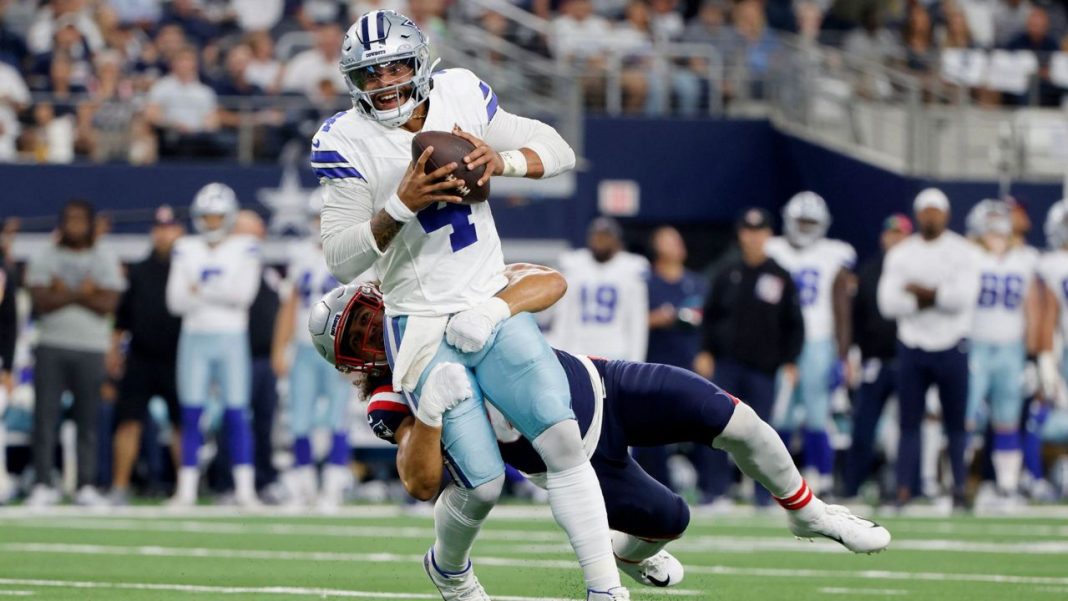
Dak Prescott, the face of the Dallas Cowboys for the past six years, finds himself at a crossroads. His talent remains undeniable: A gunslinger with a knack for the dramatic, capable of lighting up the scoreboard with his arm and extending plays with his athleticism. However, whispers of discontent and rumors of a potential trade swirl around him. Is Dak Prescott truly “done” in Dallas?
A Proven Performer, But Inconsistency Lingers
Dak Prescott’s resume boasts impressive accolades. He’s a two-time Pro Bowler with a career completion percentage exceeding 66%. His ability to stretch the field and create explosive plays has transformed the Dallas offense. In 2019, he orchestrated a dazzling 11-win season, showcasing his potential to lead the Cowboys deep into the playoffs. However, a devastating ankle injury derailed that momentum, and questions about consistency have lingered.
Critics point to interceptions and missed throws at crucial junctures, particularly in the playoffs. The Cowboys haven’t reached the Super Bowl since the golden era of the 1990s, and the yearning for a championship weighs heavily on both the fanbase and the organization. Prescott’s occasional lapse in focus and decision-making fuels the fire of these anxieties.
Leadership and Familiarity: The Case for Keeping Dak
Despite the inconsistencies, Dak Prescott offers undeniable value to the Cowboys. His leadership in the locker room is a stabilizing force. He commands respect from his teammates, and his familiarity with the Cowboys’ offensive system is a significant advantage. Replacing such a presence wouldn’t be easy. Finding a new quarterback who can seamlessly integrate into the team culture and replicate Prescott’s leadership would require significant time and resources.
Furthermore, when Prescott is on his game, the Dallas offense becomes a force to be reckoned with. His arm talent allows him to connect with receivers on deep throws, creating a constant threat of explosive plays. With talented targets like Amari Cooper and CeeDee Lamb at his disposal, the potential for a high-octane offense exists when Prescott is at the helm. Trading him would be a gamble, a risky proposition that could diminish the Cowboys’ offensive firepower significantly.
Unfinished Business: Can Dak Deliver the Lombardi Trophy?
Prescott hasn’t tasted Super Bowl glory yet but has experienced playoff success. The yearning for a championship burns bright in Dallas, a drought stretching back to 1995. Keeping Prescott gives the Cowboys a proven playoff-caliber quarterback, a player who has already tasted victory in the postseason and possesses the talent to lead them to the promised land.
Trading him would be a reset button, a gamble on an unproven rookie or a veteran with a different skill set. There’s no guarantee that a new quarterback would be able to replicate Prescott’s success, let alone elevate the Cowboys to championship contenders.
The High Price Tag: A Strain on Roster Flexibility
Prescott’s talent comes at a hefty price. His massive contract, with a cap hit exceeding $40 million per year, significantly limits the Cowboys’ ability to address other roster needs. Building a championship-caliber team requires a well-rounded approach, with a strong offensive line, a dynamic defense, and a deep pool of talent at various positions.
Prescott’s contract restricts the Cowboys’ ability to address these deficiencies, potentially hindering their overall competitiveness.
Seeking a Fresh Start: Can a Trade Benefit Both Dak and Dallas?
The argument for moving on from Prescott is multifaceted. A change of scenery could benefit both Dak and the Cowboys. A new team could provide a fresh perspective and a different offensive system that better suits his skillset. He could potentially thrive in a new environment, free from the constant pressure and scrutiny that comes with being the quarterback in Dallas.
For the Cowboys, trading Prescott would free up significant cap space. This financial windfall could address pressing needs on both sides of the ball. The resources saved could be used to bolster the offensive line, fortify the defense, or acquire other key players who could elevate the entire team.
Drafting a Quarterback of the Future: A Long-Term Gamble
Trading Prescott would also open the door to drafting a young quarterback, potentially the “franchise guy” the Cowboys have been searching for. With a high draft pick acquired in a Prescott trade, the Cowboys could be in prime position to select a talented signal-caller who could develop into the long-term answer.
This approach offers a potentially cheaper, long-term solution, allowing the Cowboys to build around a young quarterback on a rookie contract. But, drafting a successful quarterback is a crapshoot. There’s no guarantee that a rookie, regardless of his talent level, will be able to adapt to the NFL game and thrive under the immense pressure of leading the Dallas Cowboys.
Final Words
The decision regarding Dak Prescott’s future in Dallas will define the franchise’s trajectory for years. Keeping him signifies a commitment to a proven talent, albeit with a hefty price tag. Trading him marks a bold new chapter, a gamble on an unproven future with the hope of finding the missing piece to the championship puzzle.
Ultimately, the Cowboys must weigh the risks and rewards, the short-term needs and long-term vision, as they navigate this critical juncture in their quest for glory. Only time will tell if Dak Prescott’s legacy in Dallas will be unfinished business or a pivotal chapter in a championship journey.